Skip To Translation Selection Skip To Top Navigation Skip To Content Skip To Footer
Emergency Alert
UDC Operating Remotely on Friday, Jan. 30

The University of the District of Columbia’s academic and administrative offices will conduct business remotely on Friday, Jan. 30. All on-campus activities, including athletic-related activities, are cancelled.

Campuses will reopen on Monday, Feb. 2.

Staff: Contact your immediate supervisor with questions or for further instruction regarding remote work expectations. 

Faculty: Reach out to your immediate supervisor and/or the dean for questions and further instruction regarding the transition to emergency remote instruction (ERI).  The Center for the Advancement of Learning (CAL) is available to support faculty with instructional continuity, including support for Blackboard, Zoom, Webex and other teaching and learning technologies. 

CAL Faculty Support Resources

calhelpdesk@udc.edu 
Virtual Office Hours
Consultation Request Form

For learning technology tools and on-demand faculty resources, please visit CAL’s website.

Students: Due to inclement weather, the university will be closed to face-to-face operations. Instruction will be moved to emergency remote, including synchronous and asynchronous methods. Certain laboratory, clinical, and other hands-on classes for which in-person instruction is a requirement may necessitate a make-up lesson, but every effort will be made to pursue virtual learning to the extent possible. Where synchronous virtual instruction is intended, published class meeting times must be observed so that students’ schedules are not disrupted.

The safety and security of our students, faculty, staff, and the broader community remain our top priority. We will continue to provide updates regarding the status of the university’s academic and administrative offices as conditions change.

Please continue to check our website and social media channels for the latest information.

If you have any safety concerns, contact OPSEM at 202-274-5050. For all immediate emergencies, call 911.

Thank you for your continued dedication to our students and to UDC’s mission. 

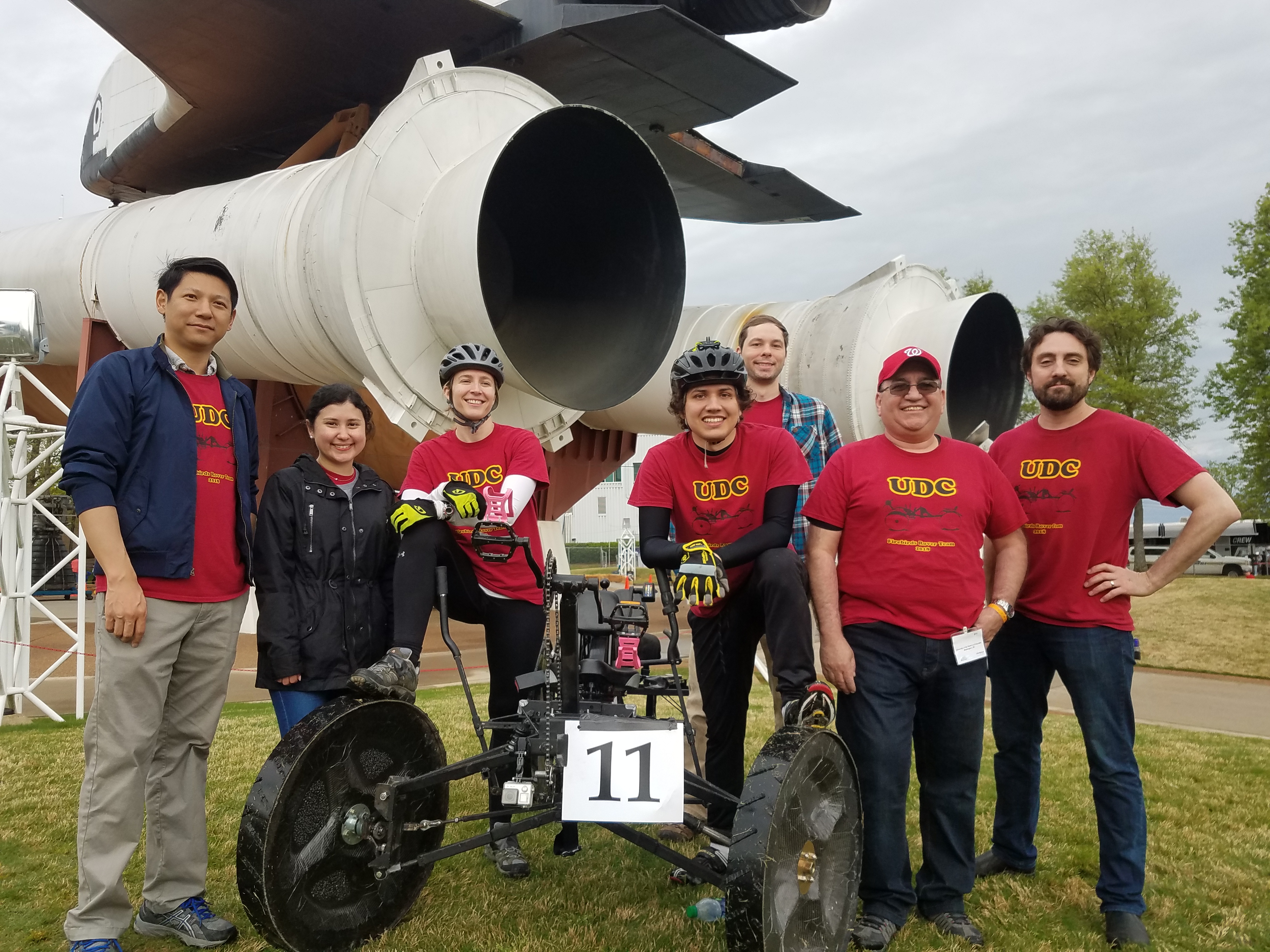
Mechanical Engineering Student

NIH-NIA Grant

$1.9M NIH NIA Grant Awarded on Advancing Aging Research and Education

The purpose of our new NIH National Institute on Aging Medical, Science, Technology, Engineering, and Mathematics, NIA MSTEM, project is to address the needs of a rapidly growing aging population by engaging, training and equipping an inclusive body of students at the University of the District of Columbia (UDC) to be able to conduct research and solve issues tied to aging. 

Of significant societal relevance is our long-term goal to increase the number of underrepresented minority professionals aimed at solving problems tied to aging via research investigations (studies) and interventions (designs and devices). It is projected that the number of individuals older than 50 years of age will increase to 1.2 billion by 2025 worldwide; however, aging-related research training is nascent at the undergraduate level, and opportunities for broad participation remain limited.

The objectives of this project are to create and foster aging-related:

  1. research experiences (tied to falls, imaging, and data analytics)
  2. new and unique curricular experiences tied to freshman and senior design projects, practicum and seminars, and professional student club activities
  3. professional development via mentorship, dissemination and outreach for the underrepresented minority undergraduate student demographic at UDC

We aim to produce a wide-ranging cadre of professionals who are well-equipped to solve issues tied to aging. This project is distinct, yet dovetails nicely with previous and current sponsored research activities at UDC focused on undergraduate aging-related (balance) research and Biomedical Engineering education. NIH NIA MSTEM grant totals $1.9M and complements our current $1.57M projected Department of Aging and Community Living (DACL), entitled Facilitating Aging individuals’ Living and Learning preventative fall Strategies (FALLS) project and prior National Science Foundation (NSF) sponsored research work, Research Initiation Award: Investigating a new Generation of Assistive, Innovative Technologies (GAIT) for balance rehabilitation.

Back to Top
Take The Next Steps, Today!