Skip To Translation Selection Skip To Top Navigation Skip To Content Skip To Footer
Emergency Alert
UDC Operating Remotely on Friday, Jan. 30

The University of the District of Columbia’s academic and administrative offices will conduct business remotely on Friday, Jan. 30. All on-campus activities, including athletic-related activities, are cancelled.

Campuses will reopen on Monday, Feb. 2.

Staff: Contact your immediate supervisor with questions or for further instruction regarding remote work expectations. 

Faculty: Reach out to your immediate supervisor and/or the dean for questions and further instruction regarding the transition to emergency remote instruction (ERI).  The Center for the Advancement of Learning (CAL) is available to support faculty with instructional continuity, including support for Blackboard, Zoom, Webex and other teaching and learning technologies. 

CAL Faculty Support Resources

calhelpdesk@udc.edu 
Virtual Office Hours
Consultation Request Form

For learning technology tools and on-demand faculty resources, please visit CAL’s website.

Students: Due to inclement weather, the university will be closed to face-to-face operations. Instruction will be moved to emergency remote, including synchronous and asynchronous methods. Certain laboratory, clinical, and other hands-on classes for which in-person instruction is a requirement may necessitate a make-up lesson, but every effort will be made to pursue virtual learning to the extent possible. Where synchronous virtual instruction is intended, published class meeting times must be observed so that students’ schedules are not disrupted.

The safety and security of our students, faculty, staff, and the broader community remain our top priority. We will continue to provide updates regarding the status of the university’s academic and administrative offices as conditions change.

Please continue to check our website and social media channels for the latest information.

If you have any safety concerns, contact OPSEM at 202-274-5050. For all immediate emergencies, call 911.

Thank you for your continued dedication to our students and to UDC’s mission. 

Counseling and Wellness Center

Get the Support You Need

About the Counseling and Wellness Center Services
The UDC Counseling and Wellness Center is available to promote psychological well-being that helpsQR code students reach their academic, personal, and relational goals. We work to help you address any issue that may be interfering with your well-being or success.  Services are provided by trained professionals and are fully confidential.

Students receive free professional assistance in managing depression and anxiety and other mental health disorders, learning about themselves, creating healthy relationships, developing life coping skills, and improving decision-making skills. Essentially, the counseling services are provided in order to help you address any personal, emotional, or psychological issues that pose a barrier to your success, so that you can achieve your potential. Personal counseling and mental health services are provided on an individualized basis, with the student and counselor collaboratively creating treatment goals. 

We offer individualized services to help you address your concerns in a supportive and collaborative manner.  Our services include single sessions (following consultation sessions), short-term therapy, insight-oriented therapy, biweekly counseling, and consultation.

Types of Issues Students Visit Us to Work Through

  • Stress Management
  • Anxiety 
  • Depression
  • Feeling "stuck"
  • Self-defeating patterns
  • Relationship issues
  • Family problems 
  • Self-esteem
  • Trauma
  • Identity
  • Grief 
  • Anger and hostility
  • Procrastination
  • Difficulties adjusting

Initiating Services and Scheduling an Appointment

Request an appointment below. We will contact you within two business days of receiving your request.

Request an Appointment

In the meantime, check out our Self-Help Resources page.  Additionally, there are some great self-help tools and strategies noted in the Winter Tool Kit. As a UDC student, you can also access the Ten-Percent Happier application that provides meditation practice to help with stress, anxiety, relationships, and sleep, among other topics.

Crisis Information

If you are experiencing a mental health emergency, please call 911 or go to the nearest emergency room. 

UDC Telephone Crisis Line — 202-274-6000

Students can now contact the Counseling and Wellness Center's Telephone Crisis Line after hours, on weekends and holidays to talk to a counselor and receive support when experiencing a mental health crisis. Students can just dial the Counseling and Wellness Center main line at 202-274-6000 to be connected to a crisis counselor after hours. 

Other Ways to Get Help

If you are in distress and need someone to talk to, you can reach out to the National Suicide Prevention Lifeline at 800-273-TALK or 800-273-8255.

You can also text the Crisis Text Line: Text “START” to 741-741.

To get emergency psychiatric care or need help with problem-solving, you can contact the DC Access HelpLine at 888-7WE-HELP or 888-793.4357.

WellTrack App

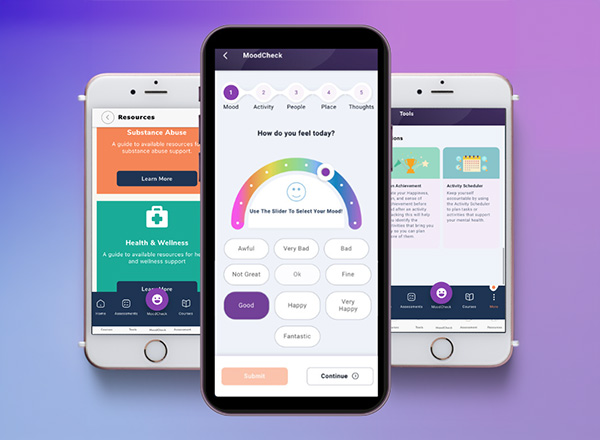
WellTrack app logoThe UDC Counseling and Wellness Center is excited to introduce a valuable resource available free of charge to UDC students. The WellTrack App (Apple | Android) is an interactive self-help platform that provides tools to help address stress, anxiety, and depression, and connects you with campus resources. Download the WellTrack App and use your UDC email to register.

apple app store logogoogle play store logo

Earn Your Be There Certificate

The Be There Certificate is a free, self-paced online course designed to enhance knowledge, skills and confidence in supporting individuals who may be struggling with their mental health.

Participants learn:

  • How to recognize warning signs in someone struggling with their mental health.
  • What to say to start the conversation without making judgments or assumptions.

5 Golden Rules of Providing Support

  • say what you see
  • show you care
  • hear them out
  • know your role
  • connect to help
Remember that Be There is NOT:
  • an instruction manual
  • peer certification
  • crisis intervention

Learn More About the Be There Certificate

Back to Top
Take The Next Steps, Today!