


CAO
April Massey, Ph.D., Chief Academic Officer
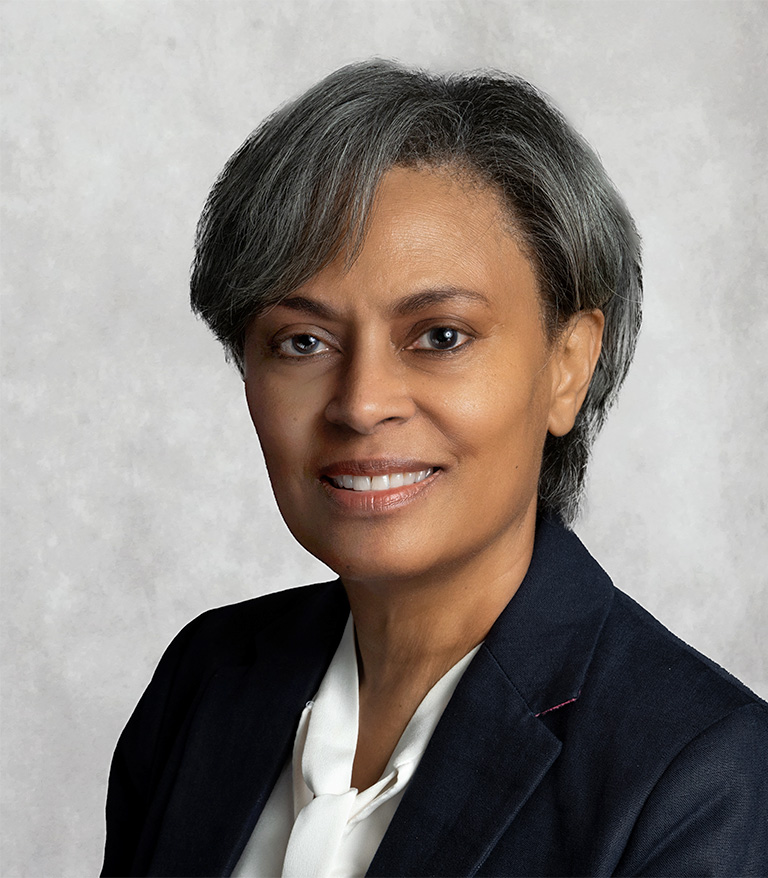 April Massey, Ph.D., serves as the Chief Academic Officer at the University of the District of Columbia (UDC). She led the College of Arts and Sciences at UDC as dean before this appointment. Dr. Massey has earned degrees from the Ohio State University, the University of Cincinnati, and Howard University. Her work focuses on career supports for faculty across the faculty lifecycle and high impact and integrated learning for students from the start through career and/or next degree transitions.
A speech-language pathologist by profession, Dr. Massey translates her disciplinary training to explore the liberal arts and leadership development coaching as spaces that foster and solidify the expertise and authority needed to plant successful teachers, content and technical experts, creatives, researchers, advocates, activists, and leaders. Her current priorities target learning circles that support faculty success; leadership coaching programs for faculty, staff, and students; program level assessment and curriculum mapping; scholarship of teaching; and exploration of signature work as a platform for strengthening academic community in a diverse and largely non traditional, commuter student body.
Dr. Massey has leveraged funding and training opportunities provided through Campus Compact of the Mid Atlantic, the American Association of University Women, the American Association of Colleges and Universities, the American Association of State Colleges and Universities, and the Brookings Institution to build signature programs under her priorities. Those programs include Dialogues in Leadership and Dialogues in Leadership Herstory, hearmelead, CASReads Big, The Teaching-Learning Roundtable, and The Last Lecture. Her efforts have garnered broad interest, resulted in numerous presentation opportunities for her, and created national networks of opportunity for the University. Her recent writings focus on the needs of women in higher education.